
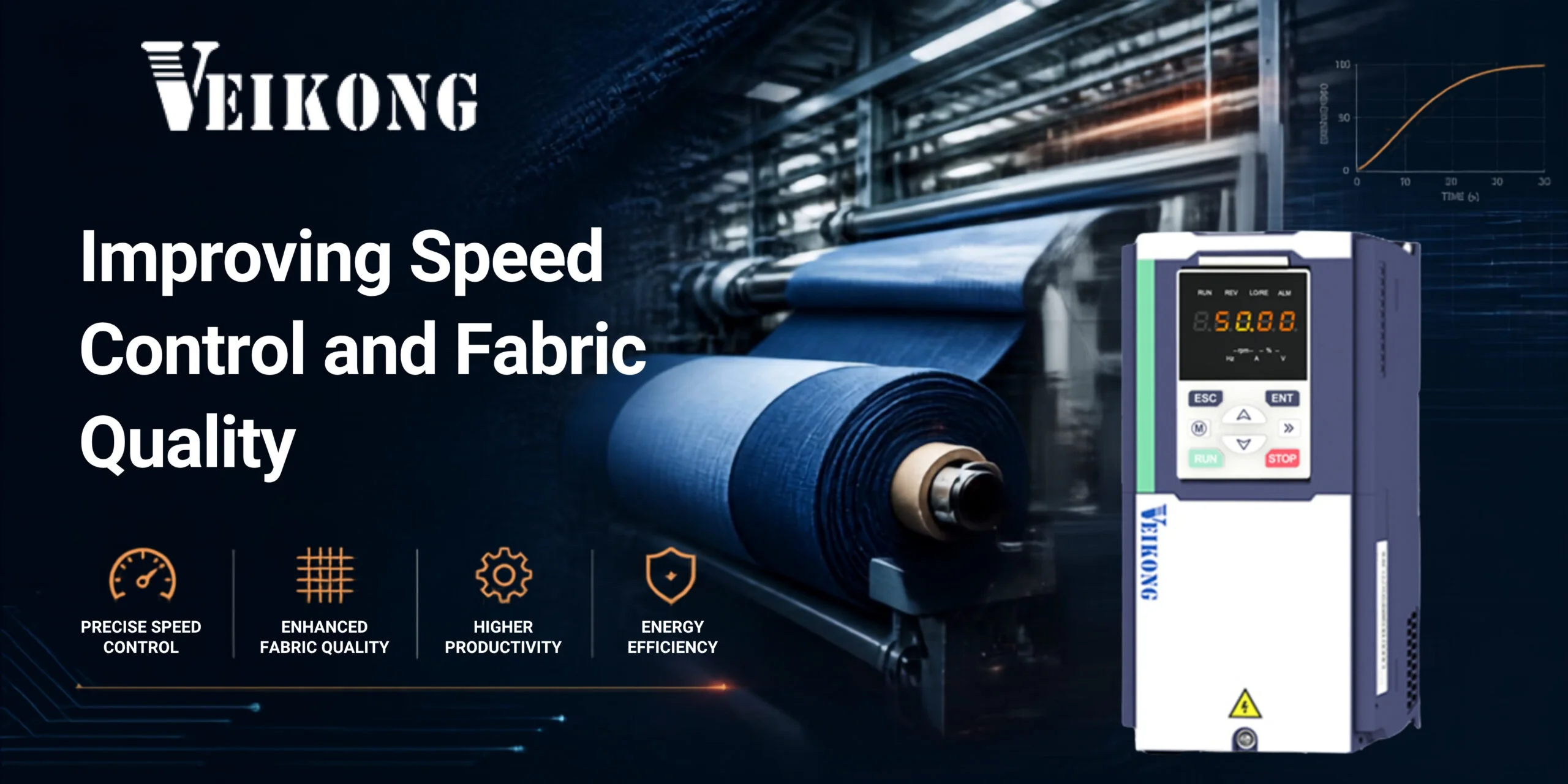
A well-run textile mill has a distinct sound: motors turning at a steady, even pace, with no jerks or surges as looms, spinning frames, and winding units carry fabric through each stage of production.
This steadiness is not a matter of chance. It is the result of precise motor control, delivered by a variable frequency drive, or VFD, which regulates exactly how fast each motor turns. Textile manufacturers have relied on this technology for years, and for good reason.
A properly matched VFD gives operators precise command over motor speed while reducing electricity consumption, which is why it has become standard equipment on production lines rather than an optional upgrade.
Why Speed Control Is So Critical in Textile Production
Few textile processes run at one constant speed from start to finish. A spinning frame usually starts slow and ramps up gradually before settling into a steady rhythm that might hold for several hours. A weaving loom needs multiple rollers turning in exact coordination, so warp and weft threads stay under even tension.
Dyeing and finishing lines are just as sensitive; the fabric has to move at a pace that lines up with how long the medical treatment or heat exposure is supposed to last.
Older motor control setups struggled with this. Mechanical gearboxes and basic on-off starters could run a motor, sure, but adjusting speed mid-operation was clunky at best. A VFD takes a different approach entirely. By varying the frequency and voltage supplied to the motor, it lets speed climb or drop in small, controlled increments instead of abrupt jolts.
Where The Level of Control Pays Off
- Thread tension stays even across the width of the fabric, which cuts down on streaking and uneven weave density.
- Yarn holds up better under fast production speeds because acceleration and deceleration happen gradually.
- Dyeing, sizing, and finishing stages line up more accurately with their intended treatment times.
- Fewer speed-related defects mean less fabric gets pulled off the line for rework.
The Direct Link Between VFDs and Fabric Quality
Fabric quality boils down to three things: evenness, strength, and finish. Trace any of those back far enough, and motor speed is usually involved somewhere.
Here’s the thing about speed drift: even a small deviation can knock parts of a machine out of sync with each other. A loom shuttle running slightly behind, or a spindle spinning a touch too fast, shows up in the finished fabric as thick patches, misaligned patterns, or spots where the weave has loosened. VFDs hold speed inside a narrow band, keeping every component of the machine moving together.
Tension control depends on this same principle. Fabric tension has to stay consistent from the spinning stage all the way through weaving and winding. A VFD constantly compares actual motor speed against the target and nudges it back in line the moment it starts to drift.
That’s what allows tension to stay steady even as bobbins fill up and get heavier, or as machine parts wear slightly with use.
How This Plays Out on the Shop Floor
- Spinning benefits from smoother acceleration, which means less yarn breakage and less fluffing.
- Weaving stays aligned because roller speeds are synchronized, preventing distortion in the fabric.
- Dyeing and finishing get more even chemical or dye uptake thanks to consistent fabric speed.
- Winding and packaging avoid loose or overly tight rolls, which matters later when the fabric gets cut and sewn.
Where the Energy Savings Come In
Fabric quality tends to be the reason mills first look into VFDs, but energy savings are often what seals the deal for management. Textile motors spend a lot of their runtime operating below full load, and older fixed-speed setups burn through electricity regardless of how much power is actually needed.
A VFD matches motor speed to the real load in front of it instead of running everything at maximum output all the time. Fans, pumps, spinning equipment, and winding machines all see meaningful reductions in power draw this way, since electrical consumption drops sharply once speed comes down even a little.
Across a full year of continuous operation, that translates into a noticeable dent in the electricity bill.
Choosing a VFD Built for Textile Work
Textile applications ask a lot from a drive, and not every VFD on the market is built to handle it. A few things worth checking before buying:
- Fine speed resolution, since fabric quality depends on tight, precise adjustments rather than broad speed steps.
- Full torque output even at low speed, which matters during startup and when handling delicate or fine yarn.
- The ability to synchronize multiple motors, especially on weaving and finishing lines where several units need to move in lockstep.
- Solid resistance to dust and humidity, given how common both are on a mill floor.
- A setup process technicians can actually manage without needing deep programming expertise.
Veikong Electric builds its AC drive lineup around these exact requirements. The VFD500 and VFD530 work well for general spinning and winding lines that need reliable speed regulation and consistent torque.
The VFD580, our high-end option, is designed for more demanding setups that require precise vector control, such as tightly synchronized weaving or finishing lines. Mills operating in tougher conditions can also opt for protection-rated models, which add extra durability against dust and moisture exposure.
Making a VFD Upgrade Actually Pay Off
Buying the right drive is only half the equation. Getting real, lasting improvements in fabric quality and energy efficiency comes down to a few operational habits:
- Program acceleration and deceleration curves around the specific machine and material rather than sticking with default factory settings.
- Make sure operators understand how speed profile adjustments affect fabric output, not just how to turn the machine on and off.
- Review drive parameters periodically as equipment ages, since worn rollers and bearings change how the motor should respond.
- Match the drive’s rating to the actual load and duty cycle; an undersized VFD tends to trip frequently and produce inconsistent speed control.
Summary
Textile production runs on precision thousands of times a day. VFDs make that precision achievable by smoothing out the speed fluctuations that once led to defects, keeping tension steady across long production runs, and trimming electricity use along the way.
For mills looking to cut down on fabric defects without letting energy costs climb, a properly matched VFD is one of the most practical upgrades available. Veikong Electric’s AC drive range, from general-purpose models through to high-end vector control units, is built to deliver exactly this kind of dependable motor control across spinning, weaving, dyeing, and finishing operations.
Have questions about which drive fits your production line best? Get in touch with the Veikong Electric team, and we’ll help you find the right match for your machinery and output goals.
Also Read: Special VFDs: Intelligent Variable Frequency Drives Designed for Demanding Industrial Applications