
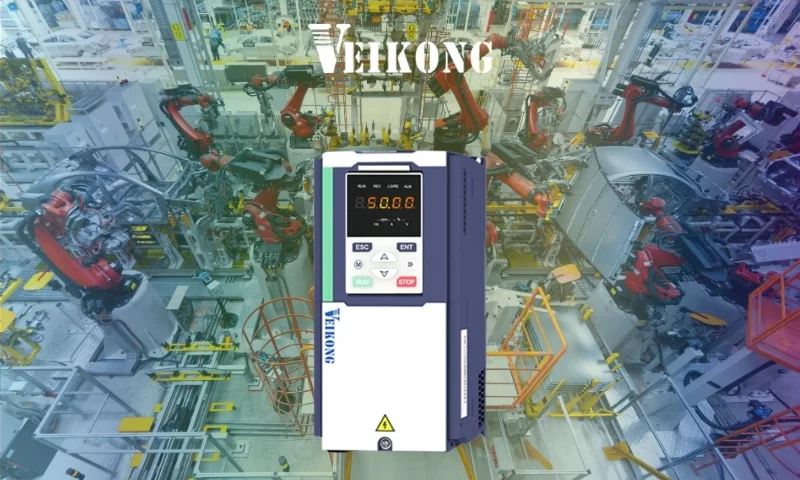
In the modern manufacturing environment, one of the major problems facing plant managers is the ever-increasing cost of electricity. Generally, most of the operational costs are attributed to energy-intensive equipment, particularly motor-driven systems.
The good news? Variable Frequency Drives (VFDs) offer one of the most effective and proven ways to reduce electricity bills without compromising productivity.
At Veikong Electric, we believe that intelligent motor control is the foundation of energy-efficient manufacturing. This guide explains how VFDs work, why they save energy, and how your facility can leverage them for measurable cost reduction.
What is a VFD and Why Does It Matter?
A Variable Frequency Drive (VFD) is an intelligent motor controller that varies the speed and torque of an electric motor by varying the frequency and voltage of its power supply.
Conventional motors run at full speed regardless of actual demand; they waste energy by consuming more than what is required for their operation, resulting in high electricity bills.
VFDs solve this problem by adjusting motor speeds according to real-time load demands so that only necessary energy gets consumed.
How VFDs Reduce Electricity Consumption
- Eliminating Energy Waste from Constant-Speed Motors
Traditional setups often run motors at full capacity, then use mechanical devices like valves or dampers to throttle the output. This wastes significant energy. VFDs get rid of this inefficiency by directly controlling motor speeds, which greatly cuts power consumption.
Result: No throttling losses, no wasted electricity.
- Leveraging the “Affinity Laws” for Massive Savings
For applications like pumps and fans, power consumption is proportional to the cube of motor speed.
- Reduce speed by 20% → Power drops by ~50%
- Reduce speed further → Exponential energy savings
This is why even small speed adjustments lead to huge cost reductions.
- Achieving 20%–60% Energy Savings in Real Applications
Depending on the application, VFDs can deliver:
- 20–50% savings in general industrial systems
- 30–60% savings in pumps and fans
- Up to 70% savings in optimized conditions
These savings directly translate into lower electricity bills and a fast ROI (often within 1–2 years).
- Improving Power Factor and System Efficiency
Efficiency VFDs also improve your system’s overall electrical efficiency. They do this by enhancing power factor and reducing reactive power losses. That means lower utility charges for wasted energy, further shrinking your bill.
- Reducing Peak Demand Charges
Electricity bills in manufacturing often include demand charges based on peak usage.
VFDs:
- Enable soft motor starting
- Reduce inrush current
- Prevent sudden power spikes
Result: Lower peak demand penalties and more stable energy consumption.
Key Manufacturing Applications for VFD Savings
VFDs are particularly effective in systems where the load varies throughout operation:
Pumps & Water Systems
- Flow control without throttling valves
- Energy savings: 20–50%
Fans & Ventilation Systems
- Adjust airflow based on demand
- Energy savings: 30–60%
Compressors
- Match compressed air supply to actual usage
- Avoid overproduction and energy waste
Conveyors & Material Handling
- Optimize speed for production needs
- Reduce wear and energy consumption
Additional Cost-Saving Benefits Beyond Energy
- Lower Maintenance Costs
VFDs allow for soft start and deceleration. This lessens mechanical shock to motors and equipment, resulting in less wear, less maintenance, and less downtime.
- Longer Equipment Life
Motors don’t constantly run at full speed or endure harsh starts with VFDs. This extends their useful life, saving you money on early replacements.
- Improved Process Control
Precise speed control leads to:
- Better product quality
- Increased production efficiency
- Reduced waste
How to Implement VFDs in Your Manufacturing Facility
At Veikong Electric, we recommend a structured approach:
Step 1: Identify High-Energy Motors
Focus on:
- Pumps
- Fans
- Compressors
- Large HVAC systems
These typically offer the highest ROI.
Step 2: Analyze Load Variability
VFDs deliver maximum savings when:
- Load fluctuates
- Full speed is not always required
Step 3: Choose the Right VFD Solution
Select drives based on:
- Motor type and rating
- Application requirements
- Environmental conditions
Veikong Electric VFDs are designed for industrial reliability, precision control, and maximum energy efficiency.
Step 4: Integrate with Automation Systems
Combine VFDs with:
- PLC systems
- IoT monitoring
- SCADA platforms
Enables real-time optimization and smart energy management.
Why Choose Veikong Electric for VFD Solutions?
At Veikong Electric, we go beyond just supplying drives, we deliver complete energy-saving solutions:
- Advanced VFD technology for industrial applications
- High efficiency and reliable performance
- Custom solutions tailored to manufacturing needs
- Strong focus on sustainability and cost reduction
Our mission is simple: help manufacturers reduce energy consumption while improving productivity.
Conclusion
Reducing electricity bills in manufacturing is no longer optional, it’s essential for competitiveness and sustainability.
By implementing VFDs, manufacturers can:
- Cut energy consumption by up to 60% or more
- Lower operational costs
- Improve system efficiency
- Extend equipment lifespan
In an era of rising energy costs, VFDs are not just an upgrade, they are a strategic investment.
Ready to Reduce Your Energy Costs?
Partner with Veikong Electric to implement intelligent VFD solutions tailored to your manufacturing facility, and start saving energy from day one.